 office@eli-uk.com
 275 New N Rd, London, N1 7AA
 Call me back
This article presents a concise overview of 5 offshore jurisdictions which are relatively unknown to many.
Samoa
Samoa is an island sovereign group situated in the South Pacific Ocean, halfway between Hawaii and New Zealand. It is in the late 1980s that Samoa became an offshore authority with the passing of the 1987 International Companies Act.
Section 228 (“No confiscation”) of this statute gives an effective guard of ensuring the protection of the assets with the section laying out how the assets of a company may be distributed under various orders of foreign courts or confiscation.
Labuan
Labuan is an autonomous province of Malaysia. Few remaining jurisdictions still fall under legislation designed especially for holding businesses. The legislation for non-trading offshore firms remains to date in Labuan.
Thus, one of the major advantages to use Labuan as a coastal administration is for holding businesses, more especially those whereby double tax agreements can be made use of. It is, however, worth noting that some of the tax treaties which Malaysia is party to specifically exclude Labuan.
Uruguay
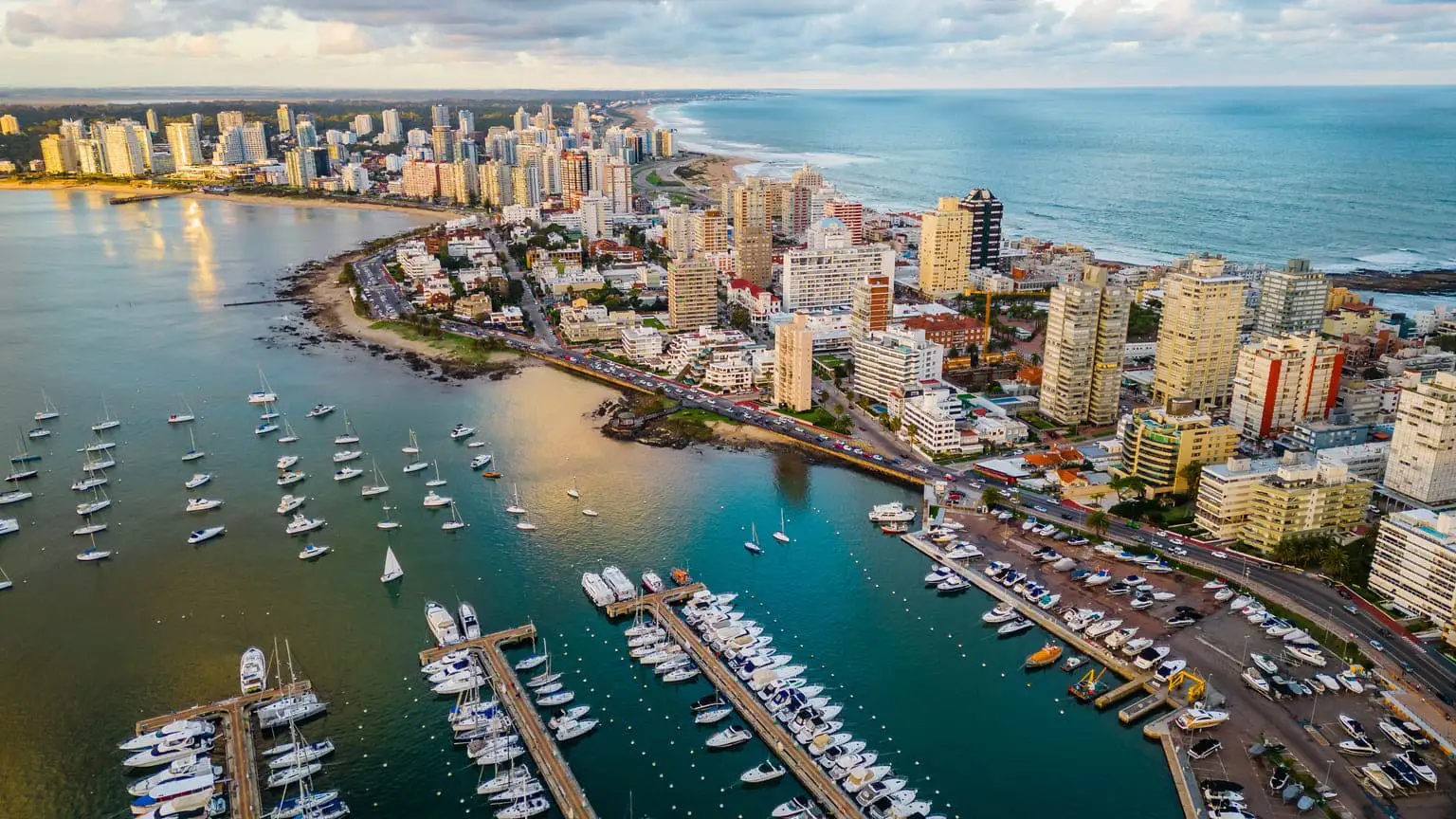
It represents an odd blend: low taxation on the one hand, applying territorial taxation whereby all profits are made outside Uruguay, and are therefore free from any form of taxation, and, on the other hand, a high level of reputability.
Although the names of shareholders and directors are not made public, the financial information, on the other hand, is available to the public, making it an optimal situation of keeping the corporation anonymous yet transparent enough for the business to be secured. This is a very convenient jurisdiction, for example, for opening a deposit account, as Uruguay maintains strong bank secrecy laws.
Niue
Niue is particularly known for the ‘.nu’ Internet top-level domain. Niue offshore legislation, which was established in 1994, is replicable and bears a huge resemblance to that of many other International Business Company (IBC) jurisdictions.
The only agreement of tax nature is a Tax Information Exchange Agreement (TIEA) with New Zealand. New Zealand acts on behalf of Niue in the conduct of its foreign affairs and any problems that relate to the questions of national defense.
The Comoros
A Comoros Islands Limited Liability Company (LLC) will grant the foreigner complete tax exemption on all incomes accrued outside Comoros Islands. Under the LLC, there shall be no double taxation, there will be limited liability, and foreigners are allowed to hold all shares in their LLC, which has one shareholder/manager.
The main advantages
A Comoros Islands Limited Liability Company (LLC) enjoys the following benefits:
- No taxes. Foreign-sourced income comes free of any tax obligation. Hence, an LLC whose sole income is from offshore operations into and out of the Comoros Islands shall not have to pay any taxes.
- No CRS. Common Reporting Standard (CRS) prescribes the Automatic Exchange Of Information (AEOI) in respect to bank accounts the world over between different respective tax authorities.
Noted: It is pertinent to note that the Autonomous Island of Mohéli, Union of the Comoros, has not signed the said document, ensuring safety in the handling of private information. An “Asset Search With Letters Rogatory” cautions that a letter rogatory (also called a “letter of request” or “legal assistance request”) from a domestic court would serve to coerce a foreign bank to expose offshore records.
Meanwhile, it is indeed quite possible for foreign authorities to contest the letters on grounds of the secrecy laws that bind some foreign banks, and thereby be considered invalid. In such cases, as a wise move, worries of such cases can be ruled out by going with the Island of Mohéli.
- Totally foreign owners. Foreign individuals can own all shares of the LLC.
- Privacy. Trader names are never disclosed in any public records.
- Limited responsibility. The liability of shareholders is restricted to their contribution to the share capital.
- Low minimum capital. The minimum authorized share capital is currently $1,763 USD.
- One shareholder, one manager. The LLC only requires one shareholder and one manager, it can be the same person for more control.
How to apply
If you want to use the Comoros as an offshore jurisdiction, take into consideration the following points. Alternatively, you can turn to the ELI UK specialists to get a complete consultation and the answers on all your questions.
Comoros Islands Limited Liability Company (LLC) Name
The name of the firm must be selected in such a way that it does not coincide with any other company throughout the Comoros Islands. Regarding the company name being selected, one can get a free verification from the government Registry.
French is one of the three official languages, and under its dictates, the company may call the name of the company to be followed by “Société à Responsabilité Limitée” or abbreviation “SARL” in English, meaning “Limited Liability Company”.
Registration
A notarized copy of the company’s Articles of Association must be filed with the Registry.
Then, file the company’s by-laws with the Ministry of Finance. Finally, file documents with the Commercial Registry.
Shareholders
An LLC in Comoros requires one or more shareholders. They need not necessarily reside in Comoros, and do not have to be a citizen of the country.
Shares can be issued as registered or preferential with or without voting rights. Bearer and nominee shares are not allowed.
Managers
The manager or managers forming the LLC shall be at least one in number. A manager may be a natural person or a juridical person domiciled in any country and may hold citizenship from any country.
Conclusion
The following benefits come with a Comoros Islands Limited Liability Company (LLC): tax-free, full ownership by foreigners, privacy, one shareholder, who can also double up as the sole manager, very minimal share capital, and limited liability.
The best choice is CG Bank, which is a 100% offshore bank incorporated under the laws of the Autonomous Island of Moheli, within the Union of Comoros. The bank is also involved in strong off-shore banking and trust sectors (in Moroni, Grand Comore, and in the Emirates), as well as having businesses in aviation and shipping industries, being part of a strong multi-national group.


